Parent's Guide to School-Age Care
Revealing Capabilities: How Montessori Methods Change Learning for Every Child
Montessori methods offer a unique approach to instruction that prioritizes autonomy, curiosity, and critical thinking. By creating prepared environments and utilizing tactile resources, these practices cater to multiple learning styles. Age-mixed classrooms foster mutual support and allow progress at their own pace. This integrated approach not only enhances scholastic abilities but also facilitates personal growth. What implications might this bear upon for the evolution of education? Exploring these questions brings to light significant understanding.
The Fundamental Principles of Montessori Education
The core of Montessori education lies in several fundamental principles that inform its learning methods. Central to this philosophy is the faith in the natural potential of every child, emphasizing respect for their unique developmental pace. The prepared environment plays a key role, designed to encourage exploration and self-directed activity. Materials are thoughtfully chosen to be engaging and developmentally appropriate, enabling children to learn through hands-on experiences. Additionally, the Montessori method supports a mixed-age classroom environment, promoting collaboration and peer learning. Teachers function as guides rather than traditional instructors, facilitating learning while observing and supporting each child's personal journey. This comprehensive approach nurtures not only cognitive abilities but also social and emotional development, fostering a lifelong love of learning. Through these principles, Montessori education aims to develop independent, confident learners who can navigate the world effectively.
Montessori Method Develops Independence in Children
Montessori education uniquely promotes independence in children through self-directed learning, letting them lead their educational journey. By highlighting hands-on life skills, children build confidence in their abilities to manage everyday tasks. Additionally, the freedom of choice inspires them to make decisions, further enhancing their autonomy and self-reliance.
Fostering Individual Knowledge Acquisition
Supporting individuality in children, the Montessori philosophy stresses self-directed learning as a primary principle. This technique enables children to control their own educational journeys, giving them opportunities to select activities that reflect their interests and growth stages. Through a prepared environment stocked with materials, educators foster exploration and discovery, allowing students to pursue knowledge at their individual pace. This independence not only encourages critical thinking and problem-solving skills but also builds a sense of responsibility. As children engage in self-directed work, they cultivate confidence in their abilities, boosting their intrinsic motivation. In conclusion, this philosophy nurtures lifelong learners furnished with the abilities necessary to thrive in an ever-changing world, establishing a strong base for future educational endeavors.
Useful Life Techniques
Supporting youngsters in mastering practical life skills forms a fundamental part of Montessori education. Hands-on activities enable children to learn important tasks like pouring, sweeping, and dressing, which build independence and confidence. These tasks are carefully designed to match youngsters’ age, allowing them to work at their own pace. Through the practice of real-life skills, they enhance fine motor coordination and cognitive skills, boosting their sense of accomplishment. Additionally, the emphasis on responsibility promotes a connection to their environment and community. As they complete these tasks, children build problem-solving skills and an awareness of the results of their actions. Practical life skills ultimately equip children for daily living and foster a lasting love of learning and autonomy.
Freedom of Preference
Children who take part in hands-on practical abilities develop a robust framework for self-reliance, which is further enhanced by the liberty to choose central to Montessori education. This approach enables children to select tasks that resonate with their passions and growth requirements, nurturing a investment over their learning. By selecting options, they learn to evaluate their preferences, organize time, and develop critical thinking abilities. This autonomy fosters internal motivation and self-assurance, as children journey through their learning path at their own pace. Moreover, the learning space is intentionally arranged to enable these choices, with resources within reach and engaging. As a outcome, children in Montessori environments not only cultivate self-reliance but also create a enduring enthusiasm for discovery through hands-on experience and learning.
How Hands-On Learning Sparks Curiosity
Hands-on learning serves as a catalyst for curiosity in children by engaging their senses and encouraging active participation. This approach promotes independent exploration, enabling students to discover concepts through their own experiences. Additionally, it nurtures creative critical thinking, equipping learners to navigate challenges in creative ways.
Engaging Through Sensory Experiences
Many investigations highlight the profound influence of sensory experiences in primary learning, illustrating how tactile interactions can spark fascination. In Montessori classrooms, students engage with materials that stimulate their senses, fostering exploration and learning through touch, sight, sound, and movement. For instance, employing sandpaper letters permits children to feel the shapes of letters while at the same time gaining to recognize them. This multisensory approach not only strengthens mental development but also fosters emotional bonds to the learning process. As students handle various objects, they develop fine motor skills and spatial awareness, essential for future academic success. Ultimately, sensory experiences build a rich, engaging environment that nurtures curious minds, making learning a dynamic and enjoyable journey.
Encouraging Self-Sufficient Exploration
Building on the importance of sensory experiences, encouraging independent exploration becomes a natural extension of Montessori principles. In this method, children are encouraged to engage with their environment openly, allowing them to pursue their interests and questions. Hands-on learning activities provide opportunities for students to manipulate materials and discover concepts at their own pace. This autonomy not only nurtures curiosity but also builds confidence, as children learn to trust their instincts and make choices. By creating an environment rich in resources and materials, educators facilitate this exploration, guiding children to follow their natural inquisitiveness. Ultimately, fostering independent exploration cultivates a lifelong love of learning, empowering children to seek knowledge beyond the classroom.
Fostering Creative Solution Development
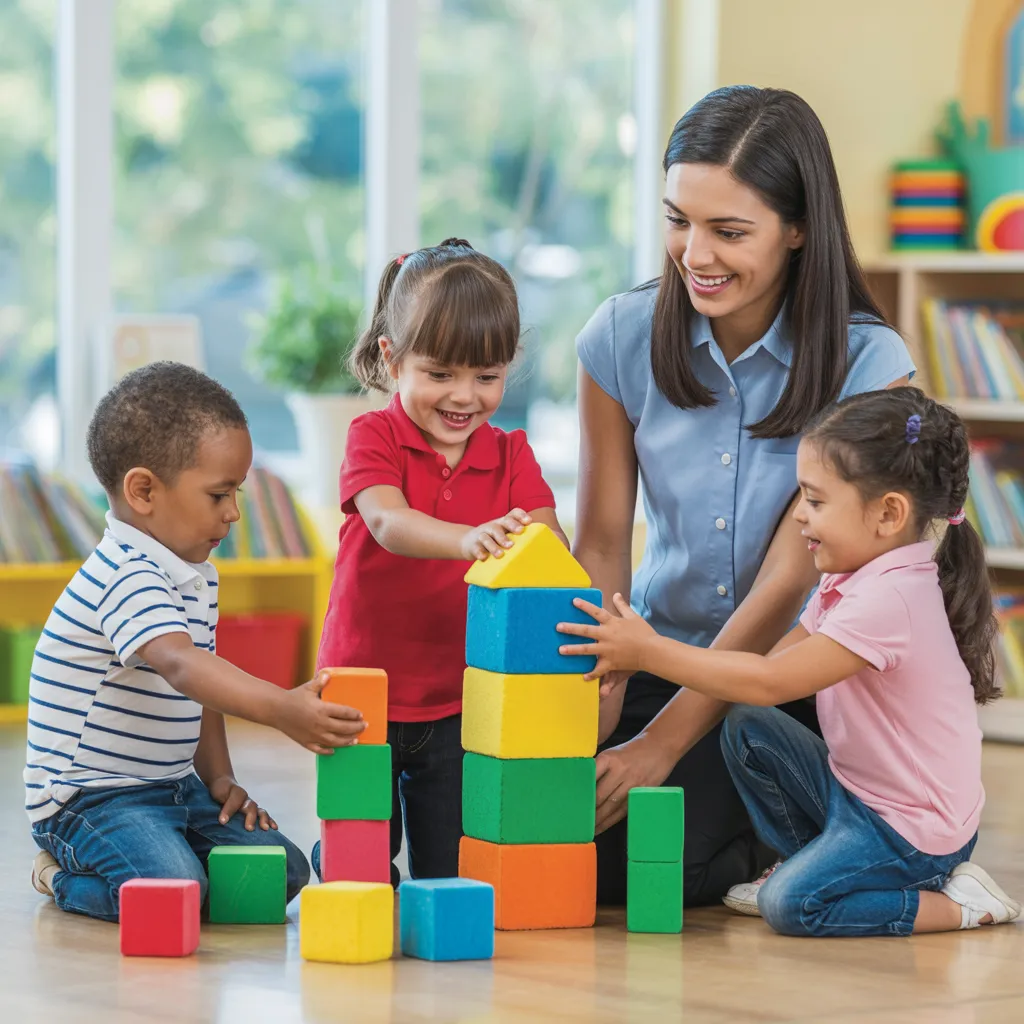
Working through tactile materials ignites children's imaginations and encourages creative problem-solving. In Montessori environments, hands-on activities permit children to explore concepts through tangible experience. This approach promotes inquisitive thinking, permitting learners to try new things and iterate on their ideas. When dealing with challenges, children understand how to devise multiple solutions, boosting their analytical skills.
The implementation of hands-on expert tips materials, such as building blocks or art supplies, invites discovery and risk-taking in a protected environment. Children are encouraged to pose inquiries and seek answers independently, strengthening determination and versatility. This method nurtures not only academic skills but also social awareness, as children collaborate and share insights. Ultimately, Montessori techniques transform traditional learning by enabling students to become resourceful problem solvers.
How Montessori Systems Promote Academic Excellence
Montessori techniques cultivate a distinctive learning environment that enhances scholastic achievement by encouraging self-directed exploration and analytical reasoning. In this approach, learners interact with hands-on materials that cater to various learning styles, promoting more comprehensive comprehension of ideas. The emphasis on individualized learning allows children to advance at a self-determined speed, cultivating a feeling of responsibility over their education.
Additionally, the mixed-age classrooms enhance peer learning, where younger students can benefit from older peers, solidifying knowledge through teaching. This teamwork-based setting builds communication skills and inspires a passion for learning. Teachers function as guides rather than traditional instructors, fostering inquiry and exploration.
Assessment in Montessori settings stresses expertise rather than evaluations, helping students to build intrinsic motivation. As a result, children often show heightened academic resilience, producing better performance in standardized assessments. Overall, Montessori methods provide a solid foundation for lifelong learning and academic achievement.
Essential Life Skills Built Through Montessori Learning
Fostering self-reliance and accountability, Montessori learning cultivates essential life skills that go further than academic knowledge. This method promotes children to act proactively and make choices, developing decision-making abilities vital for future success. By participating in hands-on activities, students develop analytical abilities and master time effectively. The focus on collaboration within diverse-age learning environments also strengthens interpersonal abilities, instilling children empathy and respect for others.
Additionally, Montessori instruction fosters self-discipline via structured routines, helping children understand the consequences of their actions. Real-world life activities, including preparing food and gardening, instill a feeling of accountability and concern for their environment. These undertakings enhance motor skills but also strengthen assurance and resilience. At the end of the day, the life skills obtained through Montessori schooling allow children to navigate obstacles and respond to new situations, preparing them for a satisfying future.
Personalizing Montessori Schooling to Assorted Learning Styles
Adapting teaching strategies to support diverse learning styles creates a more welcoming and successful learning setting. Montessori education is inherently flexible, acknowledging that children acquire knowledge in multiple ways—visually, auditorily, and kinesthetically. By utilizing hands-on activities and materials, students interact with concepts in a manner that aligns with their individual needs.
Teachers carefully observe each child, recognizing unique strengths and challenges. This assessment informs personalized lesson plans that align with each learner's style, fostering greater comprehension and memory. For instance, a child who thrives in spatial reasoning may benefit from working with geometric shapes, while another might thrive through narrative methods.
This versatility promotes a sense of self-direction, inspiring students to take charge of their learning journey. By acknowledging and adapting to diverse learning styles, Montessori education not only enhances academic achievement but also fosters a love for learning that extends beyond the classroom.
Readying Yourself for Perpetual Attainment: The Montessori Advantage
An schooling that respects individual learning styles creates a robust foundation for sustained achievement. The Montessori technique stresses autonomous learning, permitting children to examine their curiosities at their own pace. This strategy cultivates strategic reasoning and problem-solving skills, crucial attributes in an ever-changing world. By encouraging independence, students understand to embrace accountability for their studies, preparing them for forthcoming difficulties.
Moreover, the multi-age classroom space facilitates collaboration and mutual instruction, boosting social skills and emotional intelligence. Children cultivate respect for different opinions, which is necessary for success in worldwide settings. The emphasis on interactive, experiential learning further prepares students with applicable abilities suitable beyond the classroom.
Ultimately, the Montessori strength can be found in its comprehensive approach, nurturing not only academic capabilities but also personal growth. This all-encompassing educational approach readies children to face life's difficulties, ensuring they have access to the tools necessary for lifelong success.
Common Asked Questions
Which Age Groups See the Most Improvement From Montessori Schooling?
Children aged 3 to 6 years derive substantial advantages from Montessori education, as this stage encourages independence and self-directed learning. However, older age groups, including elementary students, also develop valuable skills through the Montessori approach.
How Can Montessori Education Support Children With Special Needs?
Montessori education accommodate children with special needs through offering personalized educational instruction, encouraging self-reliance, and permitting flexibility in pace. This customized method enables diverse learners to thrive in a supportive and nurturing environment, promoting their distinctive abilities.
Do Montessori Schools Cost More Compared to Traditional Schools?
Montessori institutions frequently demand increased costs in comparison to conventional education, primarily owing to smaller class sizes, specialized materials, and individualized instruction. However, fees may differ greatly according to location and specific program offerings.
What Background Do Montessori Teachers Need?
Montessori instructors typically need a bachelor's degree and focused preparation in Montessori techniques, which incorporates both conceptual learning and practical experience. Accreditation from reputable Montessori associations is often vital for instructing in accredited educational facilities.
How Can Guardians Support Montessori Methods at Home?
Parents can support Montessori methods at home by setting up a well-structured setting, encouraging independence, presenting alternatives, encouraging discovery, and promoting practical learning. Conducting exploratory dialogue also strengthens problem-solving abilities and cultivates a young person's innate wonder.